


Merry Christmas and Happy New Year!
Merry Christmas and Happy New Year! This is just a quick holiday message of what to expect on the podcast in 2024!

Dependency Opens the Door to Repentance: Devry’s Story (Part 2)
When Devry began to risk trusting God with his fears, he found that his heart became open to loving others. Instead of needing to be right so that he might be respected, he could put the needs of his family first. It changed his relationships. His influence inside and outside of his home increased.

When A Need For Safety Fuels Perfectionism: Devry’s Story (Part 1)
Devry grew up without rails to guide him. He survived by protecting himself through needing to be the one who is right in conflict. No one modeled humility and repentance for him. He needed healing and a way out of his self-protective patterns. Coming to know Jesus as a teenager gave him a new focus and hope for future change.

Trading Self-Protective Strategies For Freedom From Sin & Shame
As we move forward in our healing journeys, we realize that our old self-protective strategies no longer serve us. They never did fully protect us. Learning to trust God with our old patterns, allowing Him to do the work of repentance in us, miraculously frees us to love instead of turning to our sophisticated fig leaves. He can do in us what we cannot do.

Helping Youth Process Shame and Negative Emotions with Sara Brown, LAMFT
Caring adults sometimes don’t know what to do when children and teens express negative emotions or behave inappropriately. Sara Brown, LAMFT, shares tools and helpful hints on how parents, grandparents, or other adults can wisely interact with youth, guiding them and being present to love well.
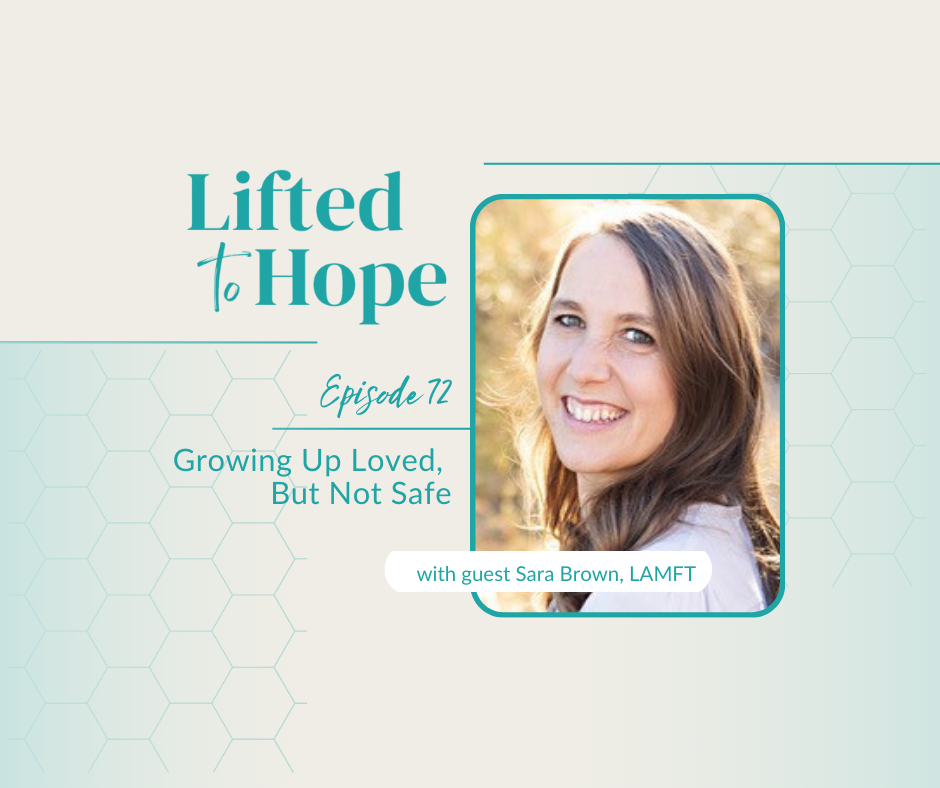
Growing Up Loved, But Not Safe with Sara Brown, LAMFT
Sara’s had a mixed experience in childhood. Her mother’s mental illness brought trauma, but her mother also loved her in beautiful ways. Sara learned to deny and minimize the painful times so that she didn’t feel the shame of the chaos. God carried her through so that she could heal and offer hope to others.

How We Use Denial to Deflect Shame
When I can’t yet face the reality of the shame I feel or the wrong I’ve done, I will find ways to deflect others from noticing. I may do the same with people I believe or a reflection of me. We use the self-protective tools of blame, denial, minimizing, and justifying to keep people distant from what we attempt to hide. God’s grace frees us to be honest with ourselves about what is true so that we can live in humble authenticity.

Intended for Good: How God Trades Tragedy for Purpose with Trish Plum, LCSW (Part 2)
When Trish Plum first got out of prison, she had no desire to return. She wanted to leave her past where it was. Yet when she went on a journey to heal from her experiences, she found her heart drawn back to the women there. Her life’s calling became to minister to them, offering the same hope she came to know.

The Painful Cost of Unaddressed Fear and People Pleasing with Trish Plum, LCSW (Part 1)
When Trish Plum first got out of prison, she had no desire to return. She wanted to leave her past where it was. Yet when she went on a journey to heal from her experiences, she found her heart drawn back to the women there. Her life’s calling became to minister to them, offering the same hope she came to know.

The Subtle Snare of People Pleasing
God calls us to serve others as an expression of His love through us. But when we rescue others to shake the shame we feel or to avoid conflict, it creates resentment. It also keeps us and others from growing relationally, emotionally, and spiritually. Learning new skills can move us out of old patterns and into healthy relational dynamics that bring peace.

Believing God’s Grace Frees Judgmental Criticism with Neesie Cieslak (Part 2)
The effects of severe childhood abuse produce significant relational issues as the person becomes an adult. Many self-protective strategies are in place to avoid experiencing the pain again. Neesie Cieslak shares how the abuse in her past played out as a wife and mother. Yet God was at work, slowly bringing healing and change, creating redemption.

God’s Grace Breaks the Cycle of Generational Abuse with Neesie Cieslak (Part 1)
Generational abuse creates a pattern that is difficult to break apart from God’s power. Neesie Cieslak, speaker, author, and family life educator, shares the first part of her story, telling about her experience of abuse and how it affected family life as she grew up. Yet God had His hand upon her life, giving her glimpses of hope.

Avoiding Shame through Judgmental Criticism
If I don’t feel confident in who I am and in my value, one of the ways I can avoid the shame I feel is to judge and criticize. The discernment I have of the strengths and weaknesses in others comes from an exaggerated valuation of what I offer. If I place myself in a posture of superiority, I believe I can distance myself from shame. Growing in self-awareness for what triggers my shame helps me to offer compassion and empathy rather than critic

Tools to Deal with Anger in Ourselves and Others with Russ Yost, LMFT (Part 2)
Anger feels more powerful than we are. It can seem impossible to get out of a state of rage once we enter it. And we can feel powerless when those we love are reacting in destructive anger. Russ Yost, LMFT, shares some of his helpful tools on how to regulate the emotion of anger, and how to respond in a healthy way when others we love are angry. There is hope for change and growth.

Understanding the Origins of Anger in Us with Russ Yost, LMFT (Part One)
It can seem like anger comes out of nowhere. We can react in anger before we have a chance to think about it. Anger can be destructive, but it can also be helpful for us to understand that we need to do something about our circumstances. Learn from Russ Yost, LMFT, a man who has struggled with anger himself, as he shares how to recognize anger and understand how to respond in a healthy way.

Using Anger As Self-Protection
Anger feels powerful. When we’ve lived with a feeling of powerlessness, it’s tempting to use anger to try to protect ourselves. Anger can take the form of rage and passive-aggressiveness, always with harmful results for those we love. Self-protective anger has its roots in relational hurt. As we allow God and others into our past hurts, we can heal and learn to live in a new way.

From Escaping to Trusting: Jacob’s Story (Part 2)
As Jacob came to understand and believe God’s promises, he learned that he no longer needed to escape through video games in order to survive emotionally. God’s hope and truth freed him to begin to let go of the old patterns and live out of who he is in Christ.

Escaping the Pain of Shame: Jacob’s Story (Part 1)
When legitimate childhood needs went unmet for Jacob, he felt alone and abandoned. A lie took shape in his mind that it was his fault. He created ways to survive the emotional pain by escaping through media. God’s hand was on him, and a healthier way of life lay ahead.

The Reasons We Avoid Shame by Numbing and Escaping
When we don’t know how to work through shame and other negative emotions, we devise clever strategies to help us numb them or escape from them. The avoidance is short-lived, and the hard feelings return. Learning to live in the present by allowing God to minister to us in them frees us to live in maturity and health.

How Living Out of An Identity in Christ Heals Perfectionism: Janelle’s Story (Part 2)
Trauma can cause delayed development, creating a lag in the maturing process. This often shows up as a lack of discipline, procrastination, and defeated perfectionism. By God’s grace and with His power at work in us, we can grow up, and tackle tasks we might otherwise avoid. Our shame heals as we gain self-respect. Janelle tells the second half of her story in this episode, sharing the process of this healing in her.